
Muhammad Ali: Beyond the Ring
A look at the life, career, and public convictions of one of boxing’s most influential champions.

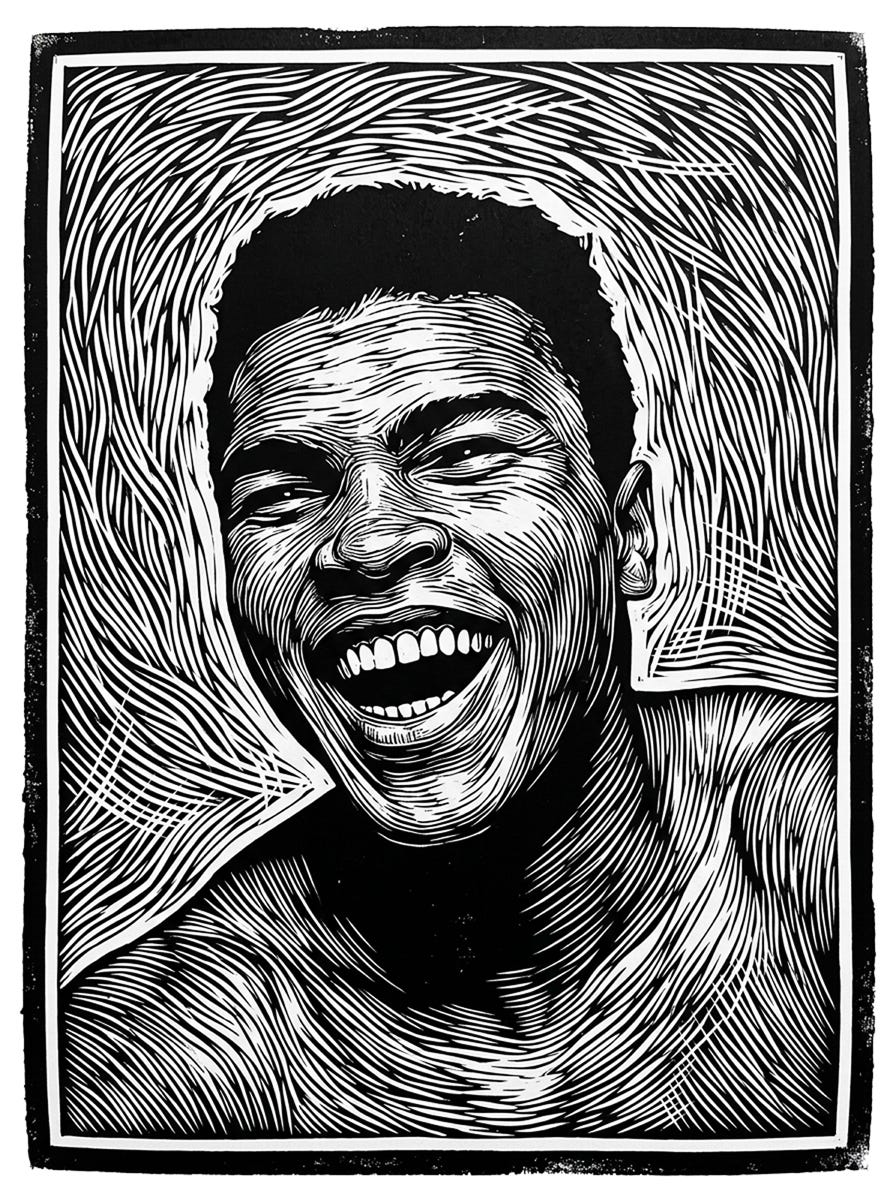
Muhammad Ali was one of the most recognised athletes of the twentieth century. Known for his boxing career, public confidence, and influence beyond sport, he became a global figure during a period of major social and political change in the United States and around the world.
He was born Cassius Marcellus Clay Jr. in Louisville, Kentucky, in 1942. Louisville at the time was a segregated city, shaped by many of the racial divisions that existed throughout the American South. Ali grew up in a working-class household. His father worked as a sign painter, while his mother worked as a domestic helper and later in healthcare support roles.
His introduction to boxing came through an unlikely event. At the age of twelve, his bicycle was stolen. Angry and determined to find the thief, he reported the theft to a local police officer named Joe Martin. Martin also trained young boxers and suggested that if Clay wanted to fight someone, he should first learn how to box.
He took the advice seriously.
Throughout his teenage years, boxing became a major part of his daily life. He trained regularly, competed in amateur tournaments, and developed a style that stood out from many of his opponents. While heavyweight boxers were often expected to rely primarily on strength and power, Clay focused heavily on speed, movement, and footwork.
By the late 1950s, he had become one of the most successful amateur boxers in the United States. In 1960, at the age of eighteen, he represented the United States at the Olympic Games in Rome and won a gold medal in the light heavyweight division.
Following the Olympics, he turned professional.
During the early years of his professional career, Clay attracted attention not only for his performances in the ring but also for his personality outside it. He spoke confidently about his abilities, predicted victories, and engaged with reporters in ways that were unusual for athletes at the time. His public presence often generated as much discussion as his fights.
His breakthrough came in 1964 when he challenged Sonny Liston for the world heavyweight championship. Liston entered the fight as the overwhelming favourite. Few observers expected the young challenger to win.
Clay defeated Liston and became world heavyweight champion.
Shortly after the victory, he announced that he had joined the Nation of Islam and would no longer use the name Cassius Clay. He adopted the name Muhammad Ali, which would become known throughout the world.
The years that followed placed him at the centre of discussions that extended far beyond boxing. During the 1960s, the United States was experiencing major debates surrounding civil rights, race, religion, and the Vietnam War. Ali became one of the most visible public figures connected to many of those conversations.
In 1967, he refused induction into the United States military during the Vietnam War, citing his religious beliefs and opposition to the conflict. As a result, he was stripped of his heavyweight title and prevented from boxing during what would have been some of the prime years of his athletic career.
For several years, he remained outside the sport.
In 1971, the United States Supreme Court overturned his conviction, and Ali had already returned to boxing by that time. That same year, he fought Joe Frazier in what became known as the “Fight of the Century.” It was one of the most anticipated sporting events in modern history.
The 1970s became the defining decade of his boxing career.
He fought many of the leading heavyweights of the era, including Joe Frazier, Ken Norton, George Foreman, and Leon Spinks. In 1974, he defeated George Foreman in Zaire, now the Democratic Republic of the Congo, in a contest remembered as the “Rumble in the Jungle.” The victory restored his position as heavyweight champion and became one of the most famous moments in boxing history.
By the end of the decade, Ali had become one of the most recognised people in the world. His fights attracted international audiences, and his name was known far beyond sports.
He retired from boxing in 1981.
A few years later, he publicly disclosed that he had been diagnosed with Parkinson’s disease. Over time, he became increasingly involved in humanitarian work, charitable activities, and international goodwill efforts. His public appearances continued to draw attention, including his participation in the opening ceremony of the 1996 Olympic Games in Atlanta.
Today, Muhammad Ali is remembered as one of the most influential figures in the history of boxing. His career spanned a period of significant change in sport, media, and society, and his name remains closely associated with both athletic achievement and public conviction.
His story continues to be studied not only by boxing fans, but also by historians, athletes, journalists, and people interested in the cultural history of the twentieth century.